
As an Amazon Associate I earn from qualifying purchases. This article contains affiliate links. Borlos may earn a commission from eligible purchases or sign-ups, at no extra cost to you.
A useful college dorm essentials checklist starts with the room you are moving into. Check what your school supplies, what it permits, and what you can share with your roommate before filling a shopping cart.
Focus on the things that help you sleep, shower, study, wash clothes, and keep a small room organized. You can add decorative items and extra appliances after you know how the space works.
Start with these three checks
- Read your residence hall’s rules. Confirm appliance limits, power-strip requirements, mounting restrictions, and prohibited items.
- Verify the mattress size. Do not assume every dorm uses Twin XL. Match sheets, protectors, and pads to your assigned bed.
- Coordinate shared purchases. Decide who brings a fridge, microwave, vacuum, rug, or mirror, if those items are permitted and needed.
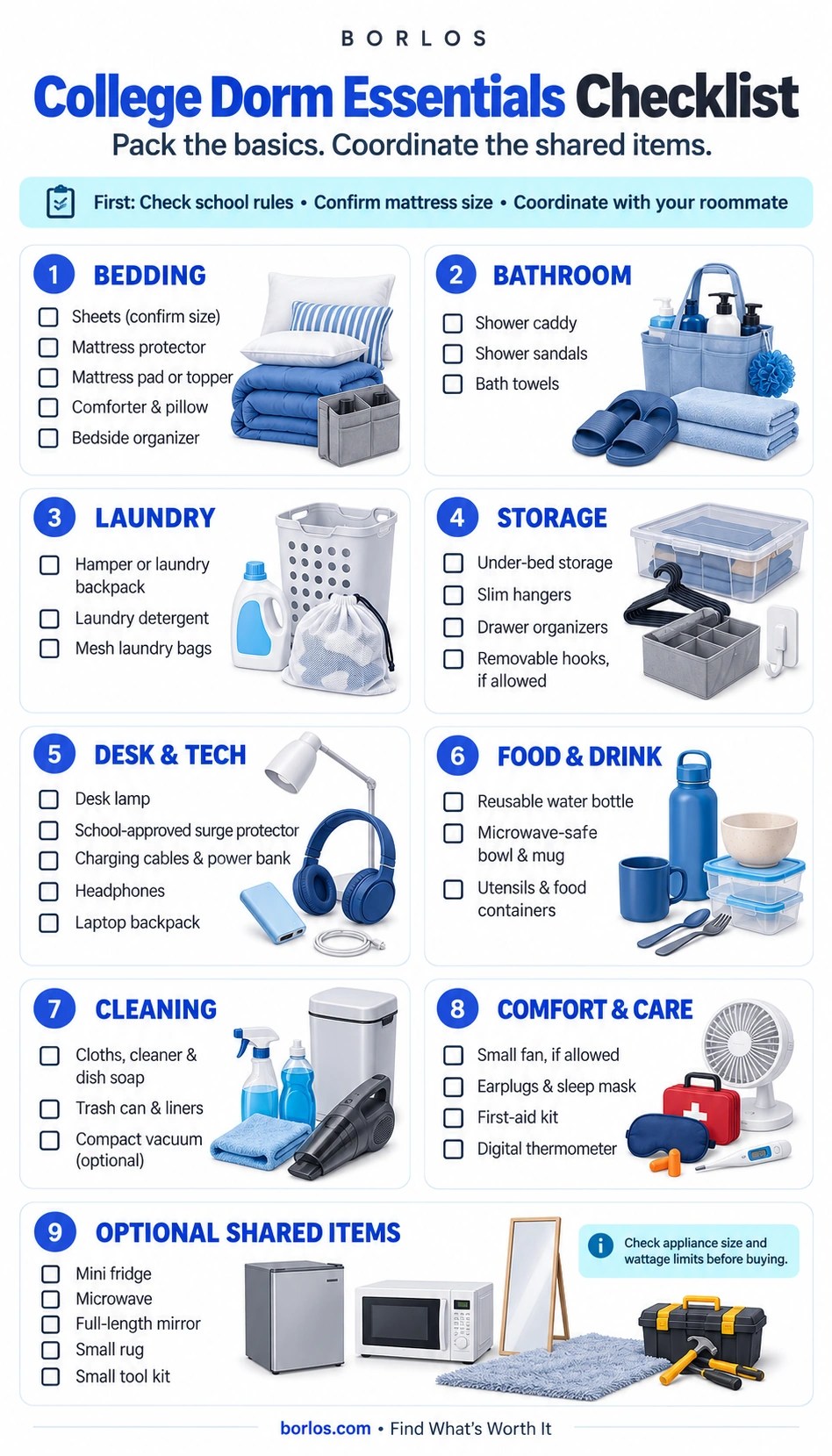
1. Bedding: start with the right size
Your bedding is one of the first things you will use after moving in. A fitted sheet that does not fit is an avoidable problem, so get mattress dimensions from housing before ordering.
- Sheet set in the correct size
- Mattress protector
- Mattress pad or topper, if wanted and permitted
- Machine-washable comforter or duvet
- Pillow
- Bedside pocket organizer, if useful
Consider a second sheet set if your laundry schedule will be irregular. A protector, quilted pad, and foam topper serve different purposes; you may not need all three. Check the washing instructions before choosing bulky bedding.

Selected product option
EASELAND Twin XL Quilted Mattress Pad
The selected listing describes a 39 × 80-inch quilted mattress pad with a cotton top. It is a soft bedding layer, rather than a thick foam topper. Confirm mattress dimensions and pocket fit before choosing it; do not assume it replaces a waterproof protector.
View on Amazon2. Bathroom: plan for your bathroom setup
A communal bathroom calls for a different setup from a private bathroom in a suite. Choose a caddy you can carry comfortably and let dry between uses.
- Shower caddy
- Shower sandals
- Two bath towels to start
- Personal toiletries and toothbrush
- Hand towel or washcloths, if used
Use toiletries you already like rather than buying a large collection of unfamiliar products. For a suite bathroom, coordinate shared supplies such as toilet paper and cleaning tools. Ask what housing provides.
3. Laundry: make the trip easy
Choose a hamper or laundry backpack based on the distance to the machines. Think about whether you will carry it down stairs, and leave room for dirty clothes without blocking the room’s walkway.
- Laundry hamper or backpack
- Laundry detergent
- Mesh laundry bags
- Access to the school’s laundry payment system
Check whether detergent is already supplied by campus machines. Follow clothing labels and detergent directions; more detergent is not automatically better.

Selected product option
The Clean People Laundry Detergent Sheets
A detergent-sheet format can be convenient to carry to a shared laundry room. Follow the package dosing directions and choose a scent that suits you. The selected listing is the Fresh Scent 96-pack.
View on Amazon4. Storage: measure before buying
Start with the closet, drawers, and under-bed space you actually have. Storage accessories should help you use that space rather than become another thing to find a place for.
- Under-bed storage bins or bags
- Slim clothes hangers
- Drawer organizers
- Removable hooks, only if permitted
Bring a manageable amount of clothing and rotate seasonal items if that is practical. Check mounting rules even for products marketed as removable. Some schools restrict adhesive hooks.

Selected product option
Budding Joy Under-Bed Storage Bags
The selected option is a four-pack of foldable 95-liter storage containers. Measure under-bed clearance and the bags’ actual dimensions. Capacity alone does not tell you whether they will fit beneath your bed.
View on Amazon5. Desk and technology: support your daily routine
Bring the devices and accessories you use for coursework. Check course requirements before purchasing a new laptop, and confirm your current computer meets them.
- Laptop and charger
- Compact desk lamp
- School-approved surge protector
- Charging cables matched to your devices
- Portable power bank, if useful
- Headphones
- Laptop backpack
Count the outlets you need, but check school requirements before choosing a power strip. Do not connect power strips together. For larger appliances, follow the manufacturer’s connection instructions and residence-hall policy.

Selected product option
15-Foot Surge Protector Power Strip
The selected listing describes eight outlets and four USB ports with a 15-foot cord. Check school rules for permitted cord length and the product’s required safety certification. Listing it here does not establish campus approval. Follow appliance instructions for plugging in a fridge or microwave.
View on Amazon
Selected product option
BLAVOR 20,000mAh Power Bank
The selected listing describes a portable battery with built-in cables and wireless charging. Check connector compatibility and size before buying. Treat it as a battery you charge normally; do not depend on its small solar panel for everyday dorm charging.
View on Amazon
Selected product option
Soundcore Q20i Headphones
The selected over-ear Bluetooth headphones include active noise cancellation. They are an option for studying and listening, but fit and comfort are personal. Keep volume comfortable and stay aware of announcements or your surroundings.
View on Amazon
Selected product option
Lenovo Legion 17-Inch Armored Backpack
The selected backpack is designed around a larger gaming laptop. Confirm your laptop’s dimensions and whether you want that much bag for daily campus use. A smaller laptop may suit a lighter backpack.
View on AmazonFor downtime between classes, compare book services before subscribing. Read Audible vs Kindle Unlimited if you are choosing between listening and reading.
6. Food and drink: keep the basics compact
Your meal plan, kitchen access, and school rules determine how much food equipment you need. A few reusable items are a practical starting point.
- Reusable water bottle
- Microwave-safe bowl and mug
- Reusable utensils
- Stackable food storage containers
Choose containers you can clean with the sink access available to you. Bring a small amount of familiar food rather than stocking an entire pantry before you know your routine. Keep perishable food refrigerated appropriately.
7. Cleaning: bring a small kit
A compact cleaning kit makes spills and routine tidying easier. Choose products appropriate for the room’s surfaces and follow their labels.
- Microfiber cloths
- Suitable cleaner
- Dish soap
- Small trash can and liners, if not supplied
- Compact vacuum, optional and shared
A vacuum may be useful for carpet or a rug, but coordinate with your roommate first. Avoid bringing several appliances that do the same job. Do not mix cleaning products.
8. Comfort and personal care
Keep this section personal. A small fan may help where it is allowed, while earplugs and a sleep mask can be useful when roommates have different schedules.
- Small fan, if permitted
- Earplugs and sleep mask
- Basic first-aid kit
- Digital thermometer
- Personal medications and necessary supplies

Selected product option
VRIEXSD 320-Piece First-Aid Kit
The selected hard-shell kit provides an organized place for basic supplies. Review the actual contents instead of judging it only by piece count. Add personal items you need separately and know where campus health services are located.
View on AmazonStore personal medications according to their instructions. Keep your campus health-service contact information accessible, and replace used or expired kit supplies.
9. Optional shared items: agree before ordering
These are conditional purchases. Your room may already include an appliance, or a shared kitchen may make it unnecessary.
- Mini fridge, if allowed and not provided
- Microwave, if allowed and needed
- Full-length mirror
- Small rug
- Small tool kit for permitted assembly
School limits matter: Tennessee Tech’s published move-in guide, for example, lists refrigerators at 4.4 cubic feet or smaller and microwaves below 1,000 watts. Its bedding requirements also vary by residence hall. These are examples of one school’s rules, not universal limits. Check your own housing guide.

Selected product option
Tehanld 4.5-Cubic-Foot Mini Fridge
This selected model is listed at 4.5 cubic feet with a separate freezer. Buy it only if your residence hall permits that capacity and configuration. Some schools set a smaller maximum or provide their own appliance.
View on Amazon
Selected product option
Chefman 0.7-Cubic-Foot Microwave
The selected listing specifies a 700-watt microwave. Confirm the school’s wattage and appliance rules, available counter space, and required clearances. Check whether the hall supplies a shared microwave before buying your own.
View on Amazon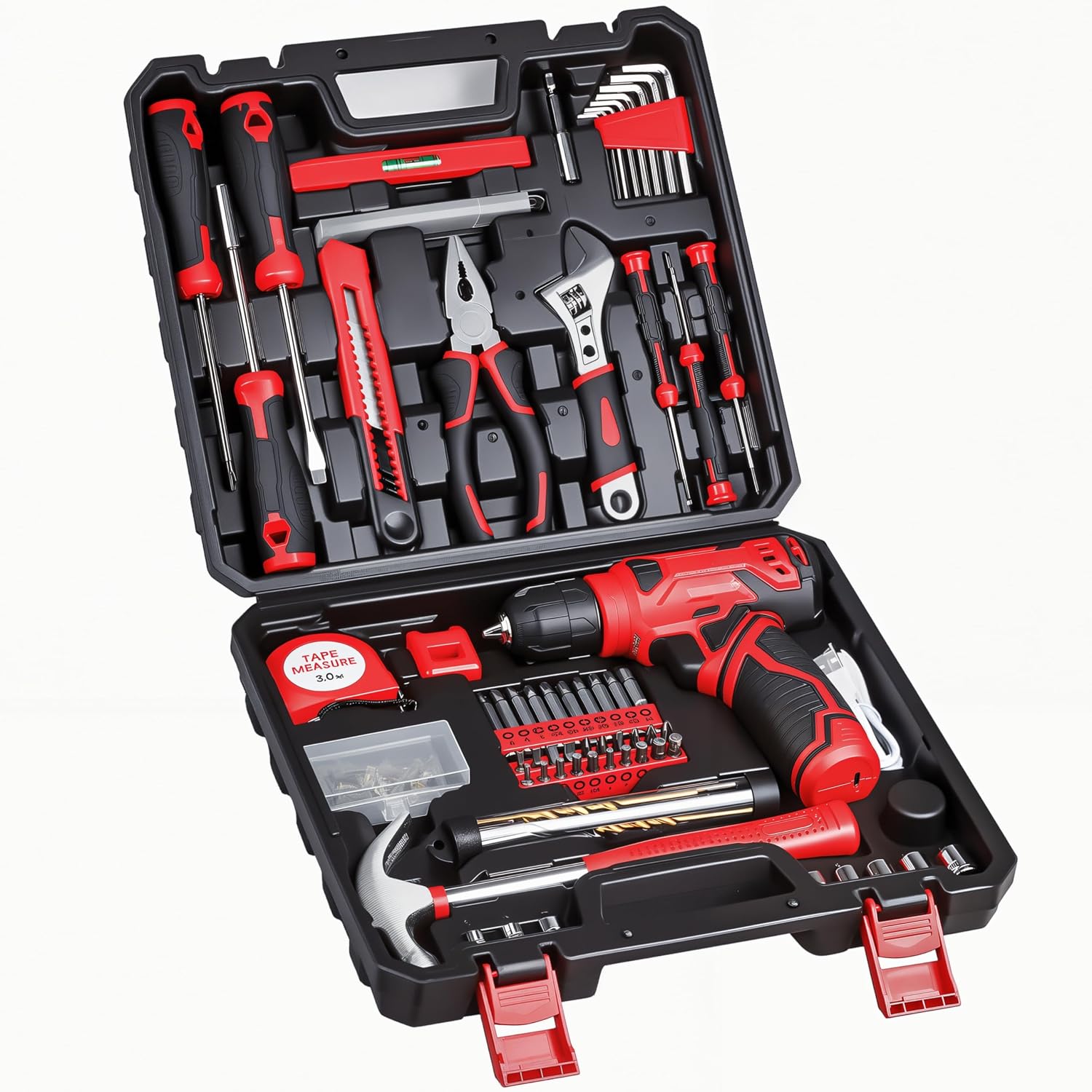
Selected product option
8V Cordless Drill and 132-Piece Tool Set
This optional set includes a cordless drill. It is more than many students need for move-in. Use tools only for permitted assembly; do not drill into dorm walls or alter school furniture. A basic screwdriver may be sufficient.
View on AmazonWrite down who buys each shared item and who takes it home at the end of the year. Compare appliance rental options with purchasing if your school offers them.
What you can wait to buy
Move in with the basics and leave room to adjust. Extra furniture, decorative storage, a large television, duplicate appliances, and extensive cooking equipment are often easier to evaluate once you see the room.
Check campus restrictions before bringing candles, heating appliances, extension cords, wall-mounting hardware, or bed risers. A product described online as a “dorm essential” is not necessarily permitted in your building.
A simple move-in day checklist
- Confirm check-in time, parking, and unloading instructions
- Keep student ID and housing details accessible
- Label boxes with the student’s name and room
- Pack bedding where you can reach it first
- Keep chargers, toiletries, and a change of clothes in a separate bag
- Bring a reusable water bottle
- Review package-delivery procedures before shipping orders to campus
Use the school’s required mailing address format. A package delivered to a campus mailroom may not be ready for immediate pickup, so avoid relying on a last-minute delivery for your first night.
Build the shopping list around what you already own
Mark each item as “already have,” “need to buy,” “roommate bringing,” or “wait.” This helps prevent duplicate purchases without requiring a fixed shopping budget. Start with sleeping, bathing, laundry, and study basics.
Check Prime for Young Adults before shopping
If you qualify, compare the current offer with your shopping and entertainment needs. Confirm the trial and renewal terms before joining.
Explore Prime for Young AdultsEligibility and offers vary. A membership does not guarantee the lowest product price.
Our Prime for Young Adults guide explains eligibility and benefits. For recurring expenses, see Best Subscriptions for College Students.
Frequently asked questions
What are the most important dorm essentials?
Start with correctly sized bedding, toiletries, towels, laundry supplies, coursework devices and chargers, and a small cleaning kit. Add storage and shared appliances after checking the room and school rules.
Do all college dorms use Twin XL beds?
No. Mattress sizes can vary by school and room assignment. Verify the size before ordering bedding.
Do I need a mattress topper?
It is optional. Consider comfort, budget, bed height, and school restrictions. A quilted mattress pad is different from a thick foam topper or waterproof protector.
Should I bring a mini fridge and microwave?
Only if permitted, needed, and not already supplied. Confirm capacity and wattage limits, then coordinate with your roommate.
Are removable hooks always allowed?
No. Check the school’s mounting policy, including rules for adhesive products. “Removable” does not mean approved for every wall surface.
Should I buy everything before move-in?
Buy the first-night essentials and wait on items that depend on dimensions, layout, or roommate preferences.
Are these products personally tested?
This checklist uses selected product listings and practical packing considerations. It does not claim hands-on testing or approval by any university. Check current specifications and residence-hall rules before purchasing.
Pack for daily life, then adjust
The best college dorm essentials checklist helps you arrive prepared without filling every inch of the room. Confirm the rules, bring the daily basics, and coordinate shared items. Once you know your routine, you can decide what else earns its space.
Sources and product notes
School-policy examples checked October 1, 2026. Product names and specifications reflect the selected listings; confirm the current version, dimensions, and details before purchase. Product images illustrate those selections.
Leave a Reply